
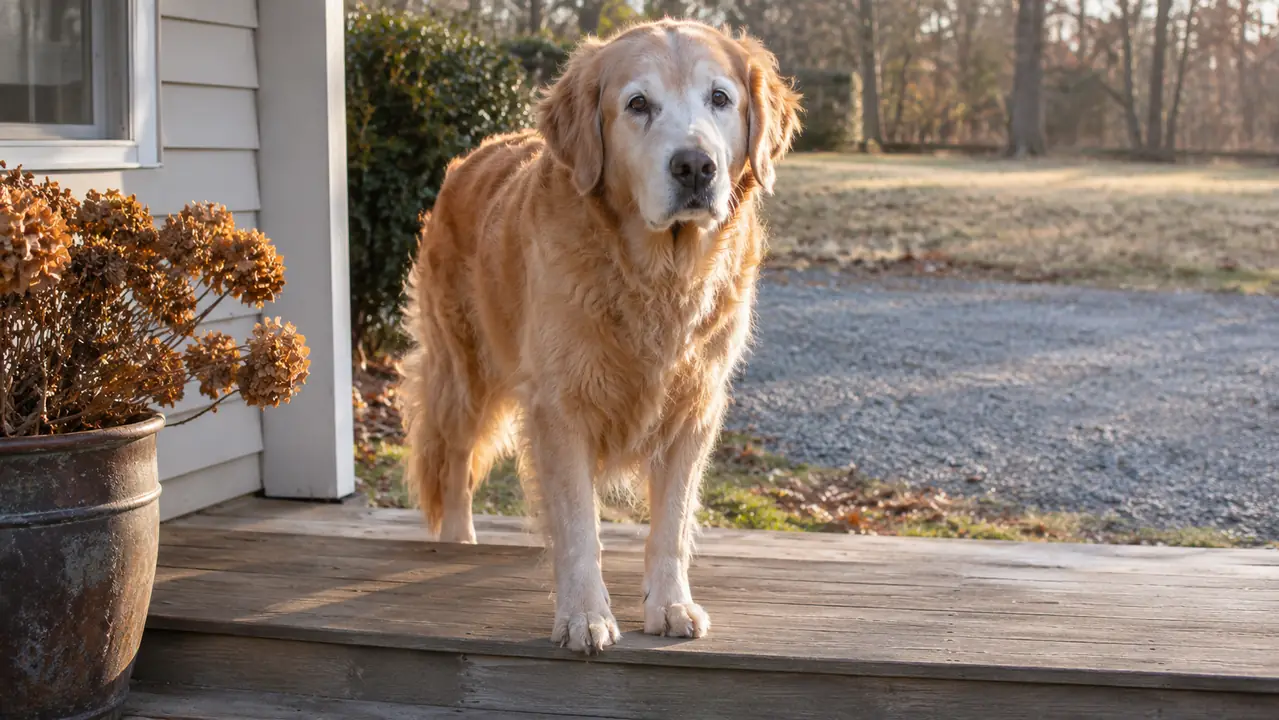
I bought the DOK TigerToes socks in March, four months after Tansy started stopping at the top of the porch steps to think about it. Not refusing. Thinking. That pause is what got my attention, because an eleven-year-old German Shorthaired Pointer who has never once hesitated about going outside does not suddenly develop patience.
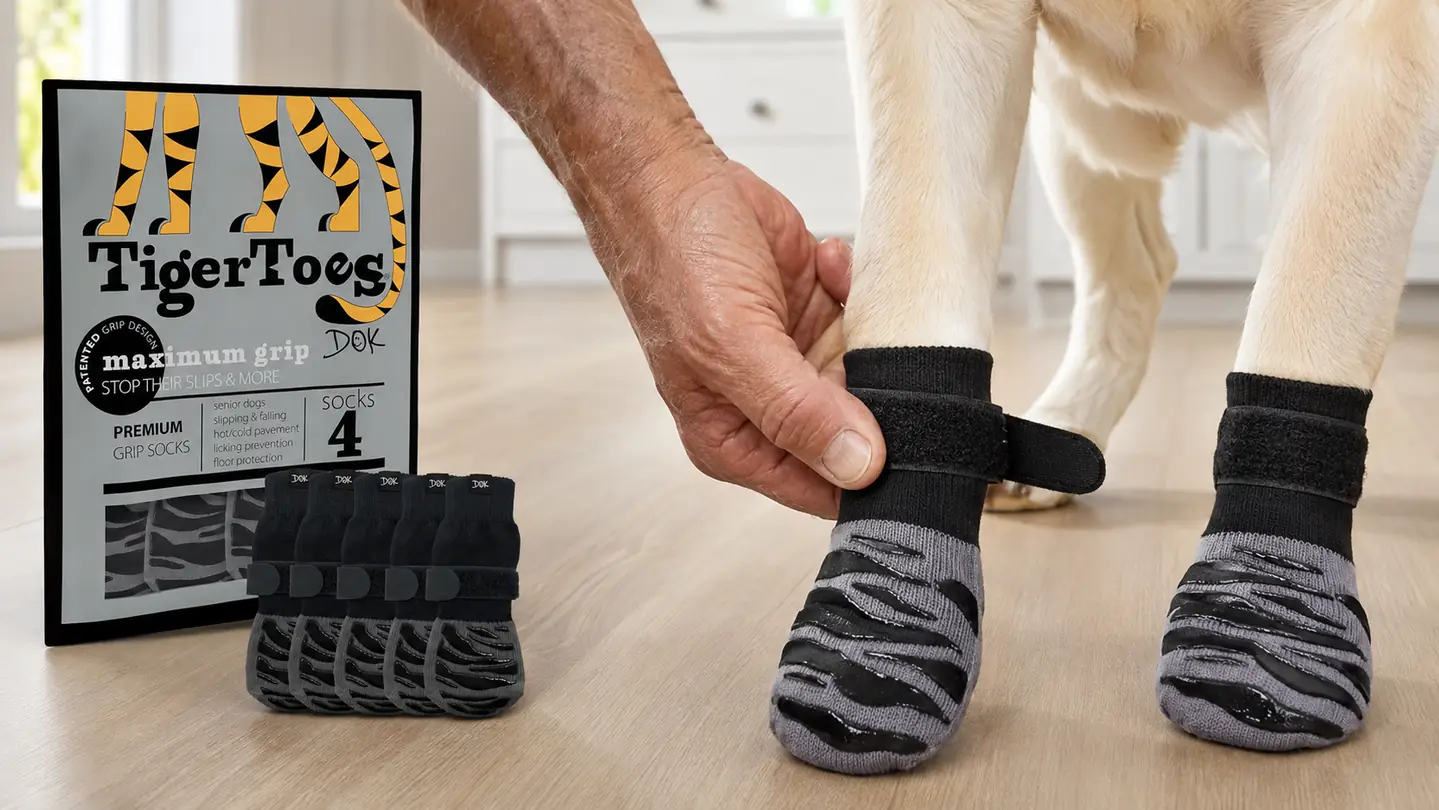
This is the honest version of the review, not the version written on day one while the socks are still clean and the dog is still confused. I am not a vet and I am not going to pretend a sock did something to her hips. What the DOK socks did was simpler and, for us, more useful. They stopped the kitchen floor from scaring her. Four cotton and nylon socks, a grip layer, a hook and loop closure at the ankle. That is the whole product. Whether it helps your dog depends entirely on why your dog is slipping, and that is the first thing the listing does not tell you.
The Quick Verdict
Grip that survives a twisting sock, which is where most grip socks fail. Expect a rough first week, a fuss over measuring, and no miracles after that.
Amazon Check Today's Price →If your dog is picking her way across the kitchen, this is the place to start
Four grip socks with a hook and loop closure, sized by paw measurement rather than body weight. Measure all four paws before you order.
Amazon Check Today's Price on Amazon →How I've Used Them, Week by Week
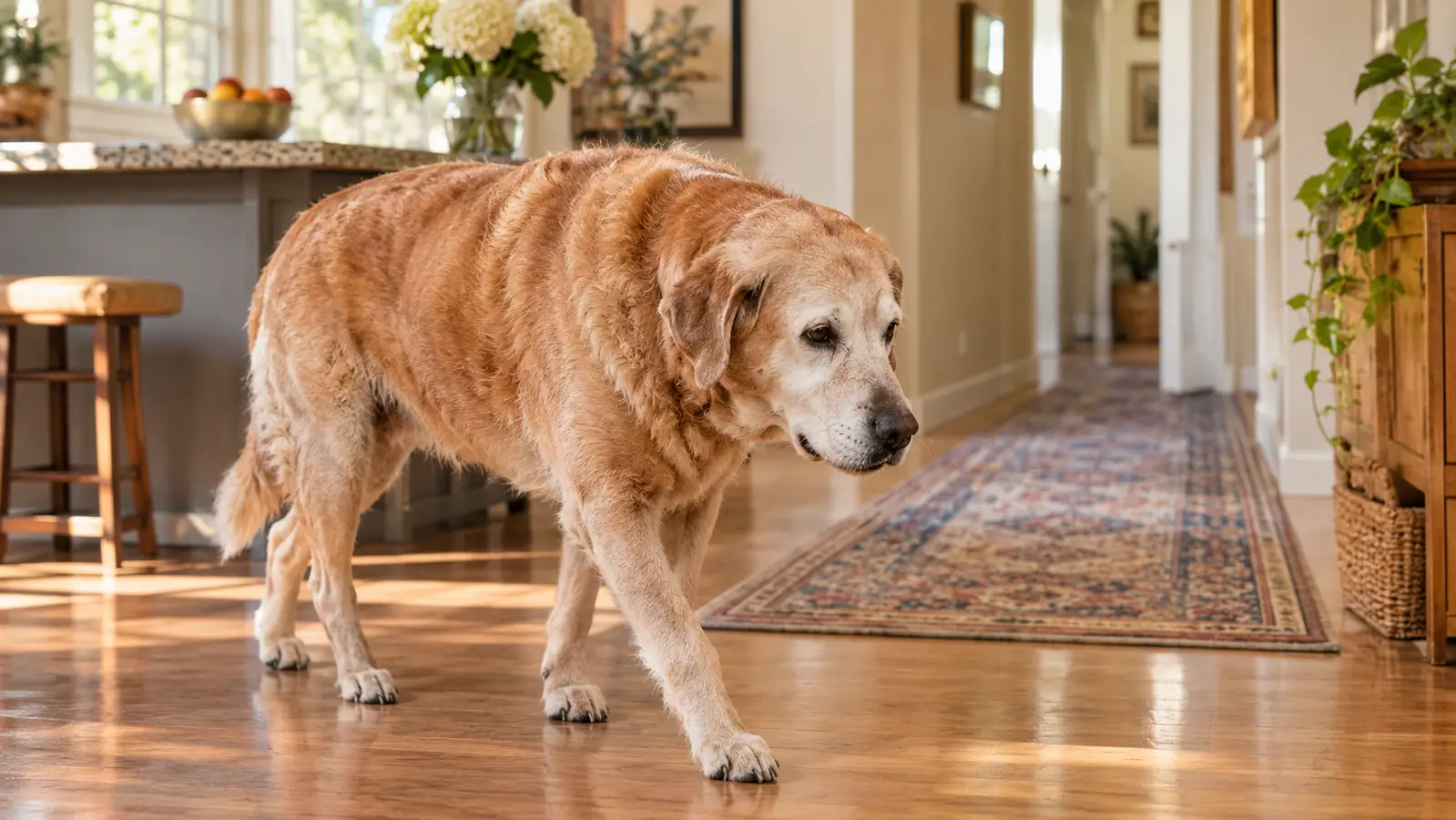
Our house is one story with a gravel driveway and a laminate floor running through the kitchen and hallway. The laminate is the problem. It is smooth, it is slightly polished, and a dog with stiff hips has to make a decision every time she crosses it. Watching Tansy make that decision twenty times a day was worse than watching her on the steps, because the steps are a known obstacle and the floor is supposed to be home.
Before I spent anything I tried the free fixes, and I want to list them because one of them might be enough for your dog. First was a folded bath towel at the bottom of the porch steps. It slid out from under her the second time she stepped on it. Second was a rubber-backed mat, which worked perfectly for the three feet of floor it covered and did nothing for the other sixteen. Third was a pair of the single-pad grip socks a neighbor handed me when I mentioned the problem over the fence. Tansy wore those for four days. On the fifth she turned on the tile, the pad rotated to the outside of her foot, and her back end went out from under her. She was fine. I sat on the floor with her for ten minutes anyway.
The routine now is this. Before Tansy gets off her bed in the morning, I put the socks on. The closure is hook and loop and the sock pulls on over the paw. It takes me about a minute for all four. The first week it took five and involved me sitting on the kitchen floor using an encouraging voice that fooled neither of us.
I did not put all four on the first day, and I would not recommend it. Day one was one sock on a front paw for five minutes with a piece of cheese involved. Day two was two socks. By day four she was wearing all four for a full morning and had stopped walking like the floor had turned to lava. What worked was putting them on while she was already lying down and calm, not while she was standing at the door expecting a walk. Asking a dog to accept a strange sensation at the exact moment she most wants to think about her feet is a fight you will lose.
At night I take them off and they go in the wash basket. They are machine washable, which matters more than I expected with four of them in rotation. If your dog freezes or refuses to move, take one sock off and try again tomorrow. There is no prize for winning the argument on the first night.
What Nobody Tells You Before the First Pair
Nobody tells you that these are not boots. They are socks. The specs list indoor and outdoor protection, and I have used them on the porch, but wet grass soaks straight through cotton. If you need a dog to cross hot asphalt in July or frozen ground in January, this is not that product and it never claimed to be.
Nobody tells you the first week is a negotiation. Tansy walked like she was crossing a frozen pond, lifting each foot too high and setting it down too carefully. That is not the socks being wrong. That is a dog who has spent a year bracing against a slippery floor suddenly having something to push against, and her muscles have to unlearn the bracing.
And nobody tells you that the socks are not the whole answer. I put a runner down the hallway. I trimmed the fur between Tansy's pads, which made a surprising difference on its own. Our vet trimmed her nails a little shorter than usual. If you only do one thing before you buy anything, ask your vet about nail length, because long nails lift a dog's toes off the floor and no sock can compensate for that.
One more thing nobody mentions: the sound. Four socks on laminate make a soft scuffing noise, and the first two nights Tansy stopped dead every time she heard her own feet. She got over it by the third day. Now that scuff is how I know where she is in the house without looking up, which I did not expect to like as much as I do.
Sizing Is Where This Goes Wrong for People
The listing says large fits paws 2.5 to 2.8 inches and includes four socks. I measured Tansy's front paw across the widest part with a soft tape while she was lying down and got 2.6 inches. At 58 pounds she is a big dog but not a giant one, and large was right.
I measured on a Tuesday morning in March, after her walk, while she was flat on the rug and half asleep. Soft tailor's tape, around the widest part of the paw, paper and pencil because I forget numbers. Front left 2.6 inches. Front right 2.6. Back left 2.7. Back right 2.75. That last one is why I am fussy about this. It sits close enough to the top of the large range that a size up would have been loose and the next one down would have pinched.
Here is what I would tell anyone ordering. Measure all four paws, not just one. Tansy's back paws are a little wider than her fronts, which is normal on a pointing breed. A sock that is too loose slides off in the night and ends up under the bed. A sock that is too tight leaves a mark above the ankle that you will feel guilty about every time you see it.
If you are between sizes, measure again rather than guessing. The difference between a sock that stays on all day and a sock that is off before breakfast is about a quarter inch. That is not a helpful thing to learn after the package arrives.
The Twist Question, Which Is the Real Reason I Bought These
Most grip socks have one pad on the bottom. When the sock rotates, the pad faces the wall and the dog is walking on plain cloth. I watched that happen with a pair a neighbor gave me. The dog went down on a tile floor and the human felt terrible and threw the socks away.
The DOK claim is 3x more grip, engineered so the traction holds even when the sock twists. I was not convinced until I watched it happen. Tansy turned on the kitchen tile, the sock rotated maybe thirty degrees, and she did not slip. The grip runs further around the foot than a single bottom pad, so a partial rotation does not put bare cloth on the floor.
I tested the twist deliberately, which sounds more scientific than it was. I put one sock on the front left, waited until she was standing at the water bowl, and rolled the sock about thirty degrees with my thumb. She walked off. No slip. Then I rolled it a full ninety degrees and she slipped on the first step, which is not the sock failing. That is me setting up a test to make the sock fail.
It is not unlimited, and I want to be clear about that. A sock turned a full quarter turn has lost most of its useful grip, and that happened once in four months while she was scratching at her bed with her back feet. Once. Compared with every single trip across that kitchen before March, I will take it.
What Took Weeks to Notice
Week one, I thought I had wasted the money. She walked strangely, she looked at me with reproach, and I started drafting the return in my head.
By week three, the pause at the porch steps had gotten shorter. Not gone. Shorter. I do not think the socks did anything for her hips on those steps. I think she was arriving at the steps less worn out, because she had stopped bracing on the kitchen floor twenty times a day.
The change I am most sure about is the hallway. It is nineteen feet of laminate between the kitchen and the front door, and last winter Tansy started taking the long way around through the carpeted bedroom to avoid it. I did not notice she had stopped until the second week of April, when she came straight down the hall past me to the door because someone knocked. That is the kind of thing a person can verify. It is not a mood or a good day. She had a route she was avoiding and she stopped avoiding it.
Week six, she got up off her bed in one motion instead of two. I noticed because I had gotten so used to the two motions that the one motion looked wrong to me.
I also stopped throwing the ball on the gravel driveway. She wants to. She pays for it the next day. That was a harder change for both of us than the socks ever were, and it had nothing to do with the product.
Month four, here is the honest summary. Tansy is still eleven. She is still stiff after a long nap. She still takes the two back porch steps one at a time and she still needs a hand up into the Subaru. But she moves through the house now instead of picking her way across it, and that is a real change and I am not going to dress it up as more than it is.
Four Months and a Dozen Washes Later
Durability is where inexpensive dog products usually fall apart, so I kept track. The socks have been through the machine roughly a dozen times on a normal cycle and air dried over the back of a chair. The grip has not cracked or peeled. The cotton has pilled slightly at the toes, which I expected. The hook and loop closure on one sock has picked up a little dog hair that I pull out with my fingers, and that is the only maintenance note I have.
The elastic at the ankle has stayed put. That was the failure point I was watching for, because a sock that will not stay up is a sock that ends up in the yard and gets mowed over in June. None of the four has lost enough shape to slide down during a day of wearing.
Tansy weighs 58 pounds and she does not chew at her own feet, so I cannot tell you how these hold up against a dog who nibbles at them. The listing mentions preventing licking as a use, and I can see how a sock would interrupt the habit, but I have no experience with that and I am not going to invent one for the sake of a fuller review.
What I Liked
- The grip holds when the sock twists partway around the foot, which is the failure that ruins most grip socks
- Hook and loop closure stayed put through a full day of wearing and a dozen machine washes
- Cotton and nylon, machine washable, dry fast enough to rotate two pairs
- Sized by measured paw width, 2.5 to 2.8 inches for large, rather than by body weight guessing
- Four to a pack, so you have a full set on the dog and a set in the wash
Where It Falls Short
- The first week is a negotiation and some dogs simply never accept them
- Cotton is not waterproof, so wet grass soaks straight through
- A sock rotated a full quarter turn loses most of its grip
- You have to measure all four paws, which is a fuss with a stiff dog
- They do nothing for the joint itself, and anyone hoping otherwise will be disappointed
The socks did not make Tansy younger. They stopped the floor from taking away the small amount of confidence she had left.
Who This Is For
This is for the owner of an older dog who slips on a hard floor inside the house. If your dog scrambles to stand up on tile or laminate, or stands with her feet wide like a skater on ice, that is the exact problem these address. The listing says senior dogs, and that is accurate, though the socks are not doing anything medical for a senior dog.
It is also for the person who already tried the cheap grip socks with the single bottom pad and watched them rotate and fail within a week. That specific frustration is what DOK engineered around, and in this house the claim holds up. If you have a smooth floor and a stiff dog, this is the version worth trying before you give up on socks entirely.
Who Should Skip It
Skip these if your dog's problem is pain rather than traction. If she yelps when she stands, favors a leg, or has stopped eating, that is a vet visit and no sock on earth will touch it. Our vet is the one who told me Tansy's hips and knees are showing age after her senior checkup. The socks came after that conversation, not instead of it, and I would not have it any other way.
Skip them on stairs. Tansy takes the two back porch steps one at a time and she will keep doing that. These are for flat, hard, smooth surfaces. On carpet they are unnecessary and on stairs they are a hazard, so I take them off before she goes back to her bed, which is carpeted anyway.
And skip them if your dog will not tolerate anything on her feet and you are not willing to spend a week or two on it, or if you need real protection on rough ground, because cotton and nylon are not built for gravel. None of that is a failure on your part. It just means this is not your product.
Measure the paws first, then decide
Four socks, 2.5 to 2.8 inch paws for large, machine washable. Give it two weeks before you make up your mind, and ask your vet about the hips separately.
Amazon Check Today's Price on Amazon →