
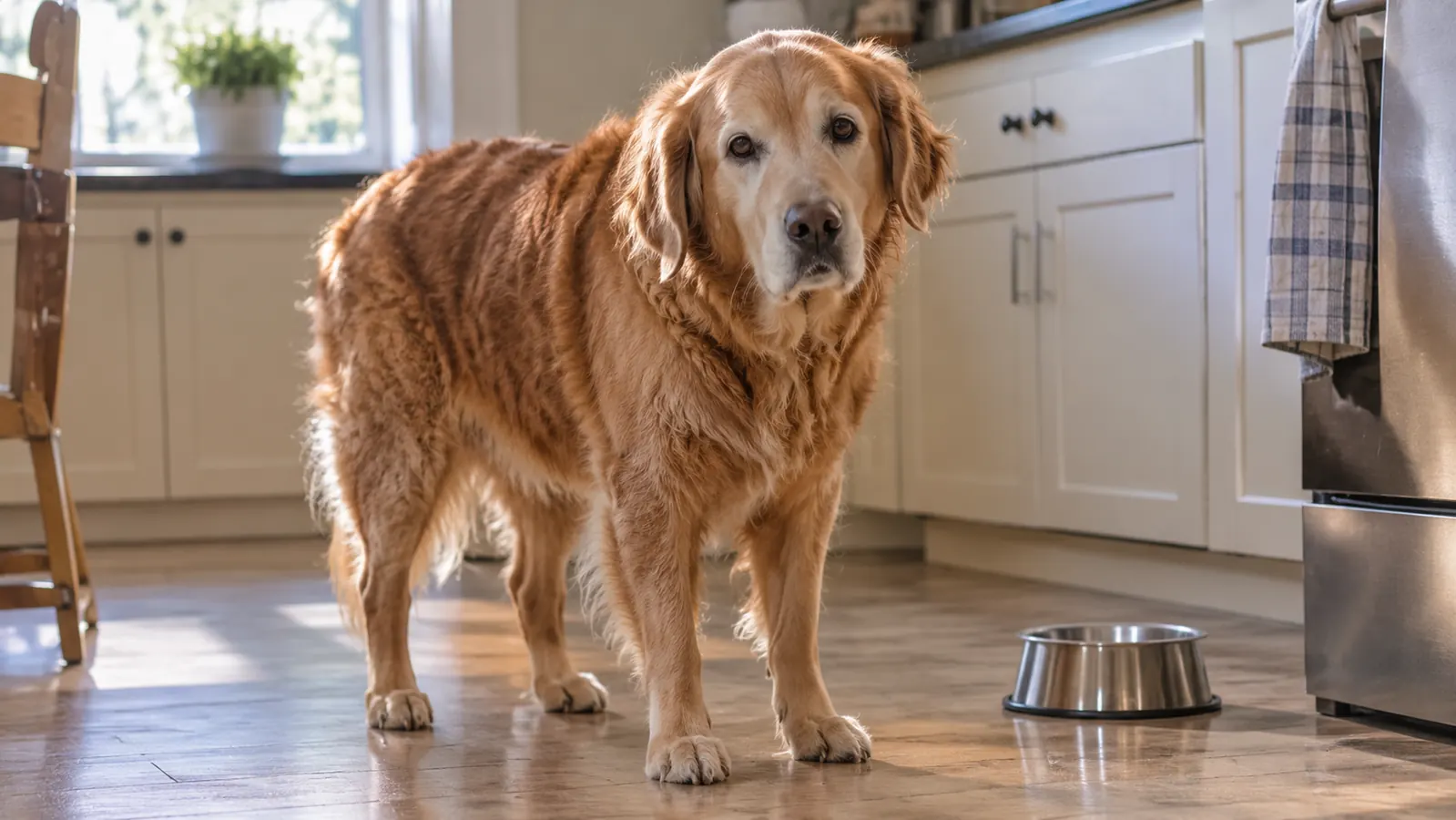
The kitchen is where it shows up first. Tansy, my 11-year-old German Shorthaired Pointer, comes around the corner toward her water bowl, her back feet hit the laminate, and both of them slide out from under her. She catches herself. She always catches herself. But she is 58 pounds of dog, and I watch the correction travel up her spine and settle in her hips, and I know that a fall is a matter of time and not luck.
I tried the cheap fixes first. A bath mat by the bowl, a runner in the hallway, a scrap of carpet at the bottom of the porch steps. The mats slid. The runner bunched, and Tansy caught a toenail on the edge of it and stumbled worse than she would have on bare floor. The booties came off in the yard in under a minute. The first thing that stayed on her feet was a set of DOK TigerToes grip socks. I am on my third set now.
Every Rug in This House Has Slid. These Have Not.
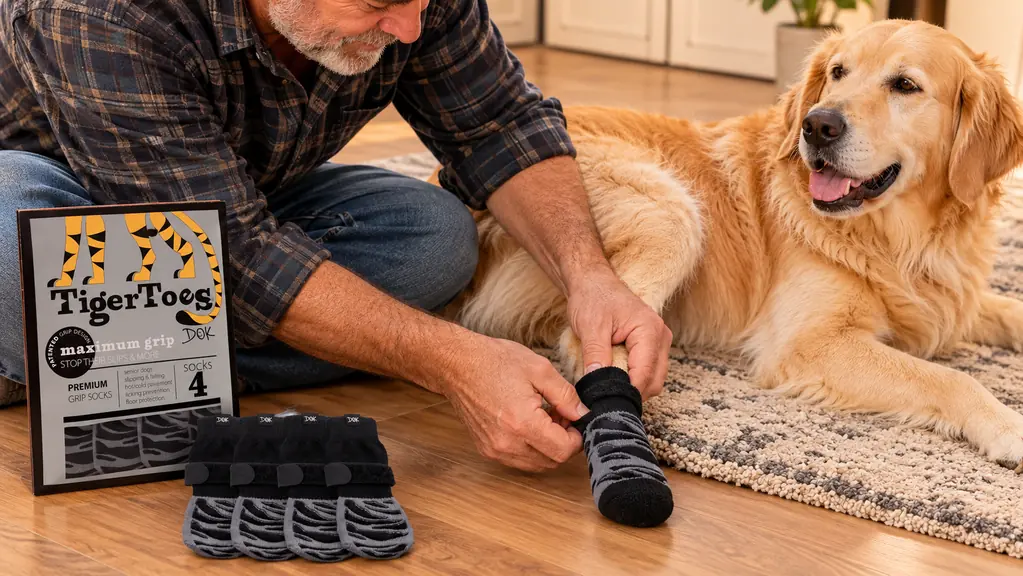
DOK TigerToes are grip socks made for hard floors, not booties made for snow. The Large fits paws 2.5 to 2.8 inches, the set comes with four socks, and the grip is built to keep working even when the sock twists. Hook and loop closure, machine washable. It is the only thing I have put on Tansy's feet that she stopped arguing about.
Amazon Check Today's Price on Amazon →What follows is the order that finally worked, and it is not the order I did it in. I bought the socks first and figured out the rest later, which cost me a set that was the wrong size and about six weeks of watching her scramble while I decided whether she was really struggling. If you take these five steps in order, you will get there faster than I did.
Step 1: Find Out Where She Is Actually Slipping
Before I bought anything, I spent a week watching Tansy move through the house instead of just noticing her. I kept a notepad on the counter and wrote down every time she scrambled. The kitchen, every time, especially the turn at the water bowl. The hallway, when she came in from the gravel driveway with damp paws. The strip of laminate at the bottom of the two porch steps, where she lands a little heavier than she used to. Three places, and not one of them was the living room, which is carpeted. I counted eleven scrambles in seven days. That sounds like a small number until you work out that it is more than once a day on a floor she has walked for nine years without thinking about it.
I also filmed her on my phone, standing up from a nap on the kitchen floor. That thirty seconds of video was more useful than a month of me trying to describe it. She pushes off with the front end and the back feet skate for a beat before they catch. Our vet had already told me at her senior checkup that Tansy's hips and knees are showing age, and watching the video I could finally see what that looks like in practice. Ask your vet before you change how your dog gets around. Mine is the one who told me traction was the place to start.
That notepad turned into the whole plan. I did not need socks for the carpet, the yard, or the trail. I needed them for about forty feet of laminate, and knowing exactly where the problem was kept me from buying four things I did not need. It also kept me from buying three things for the living room, which is where I would have started if I had gone by instinct instead of by the notepad.
Step 2: Measure the Paw, Do Not Guess the Size
Socks sized by weight alone are the ones that end up in a drawer. Measure the paw. Put a sheet of paper on the floor, have your dog stand on it normally, and mark the widest point of the paw that is taking the weight, nails included. Do all four. Tansy's front paws are wider than her back, and it is her back feet that slide, so I measured the back paws and then checked the front against the same chart. The paper trick took four minutes and I did it on a Sunday morning while she was still sleepy and willing to stand still, which is the only window in the day when that is true.
DOK sizes the Large at paws 2.5 to 2.8 inches. Tansy's back paws measured just under 2.7, which put her comfortably in the Large. If your dog lands right on a line between sizes, measure twice and size to the paw that is doing the slipping, not to the average of all four.
The first set I ordered, back before I had measured anything, was a size up from this one, on the theory that bigger would be easier to get on. It came off in the hallway in under a minute and I gave it to a neighbor with a bigger dog. The set that fits comes with four socks, and that matters more than it sounds. Socks go through the wash, socks get lost, and a dog with four socks is a dog whose owner is not doing laundry at ten at night. The material is cotton and nylon and they are machine washable, which was the second question I asked and the one most listings do not answer plainly.
Step 3: Get the First Sock On Without a Fight
Do not put the first sock on standing over your dog in the middle of the kitchen. Sit on the floor with your back against a cabinet and let her come to you. Let her sniff the sock. Treat. Touch the paw, treat. Touch the paw with the sock, treat. This took me two evenings and it was worth both of them, because Tansy is a pointing dog with strong opinions and I did not want to spend the next year wrestling her.
Back feet first, since that is where the slipping is. Open the sock, guide the paw in, pull it up past the wrist, then fasten the hook and loop closure. Snug enough that it will not spin, loose enough that you can slide a finger under the strap. If you have to yank, it is too small or too tight, and either way she will fight you tomorrow. My first attempt at the closure was too tight, and Tansy held that foot up off the floor for a full minute before I noticed. That is her telling me, and it is the only signal you get, so watch the foot rather than the clock.
One sock the first day. Two the next. Stop while it is still going well, even if that means ninety seconds of wearing one sock on one foot. Tansy lay down and refused to move the first time, which I took as information rather than failure. The next day, with a better treat, she stood up and walked to her bowl. That was the whole victory. She walked to her bowl without scrambling.
She went from sliding on the turn at the water bowl to walking through it. Not faster. Just without the scramble.
Step 4: Keep the Grip Under the Paw, Not On Top
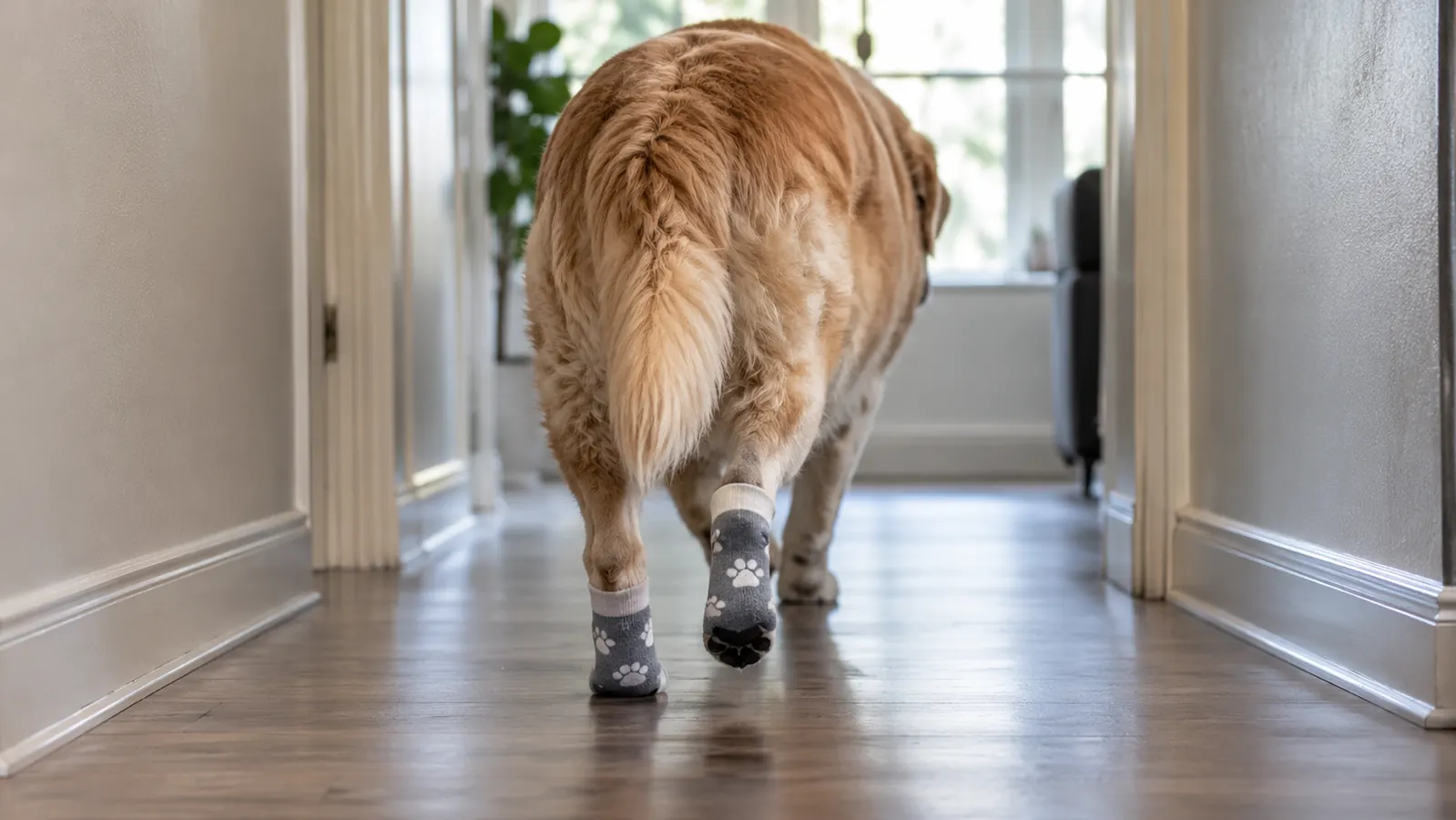
Socks rotate. Any dog that has worn them for a week will tell you the same thing. The grip on the TigerToes is built to keep working even when the sock twists, which is the reason I stopped looking at other brands, but twisted still means you straighten them.
Check at ten minutes and again at the end of the session. If the grip has spun around to the side, straighten the sock, refasten the closure, and watch whether it happens again in the same direction. If it does, the sock is too loose or too big, and no amount of straightening will fix it. If it leaves a red line across the top of the paw, it is too tight, and off it comes. That red line took three days to fade the one time I got it wrong.
Hook and loop picks up dog hair and carpet fuzz, and once it does, it stops holding. Pick it out with your fingernails every few days. A sock that will not stay fastened is almost always a dirty closure and not a broken product, and I learned that after ordering a replacement set I did not need.
Step 5: Build a Routine She Will Tolerate
Socks are for the laminate. That is it. Tansy wears them in the kitchen and the hallway, and they come off before we go out to the gravel driveway or the yard. Grass does not need grip, and a sock that goes outside every day will wear through at the toe in a matter of weeks. The first set I took outside lasted eight days before the toe went thin, and that was the last time I did it.
Nails and paw fur matter as much as the socks do. A dog with long nails is a dog that slides, because the nail lifts the pad off the floor and the pad is the part with any grip on it. I keep Tansy's nails trimmed every three or four weeks, and I ask the groomer to clip the fur between her pads flush with the pad itself. The groomer's clippers do in ten minutes what takes me forty and a lot of apologizing. Do that and the socks work better. Skip it and you are fighting the floor with one hand behind your back.
I keep two sets in rotation so there is always a clean pair in the drawer, and I wash them with the regular laundry on a machine cycle, per the care instructions. The bath mat went back by the water bowl, this time one with a rubber backing that stays put. Ten weeks in, the routine is this: socks on when she gets up, off before we go outside, on again after supper. She stands at the cabinet now and waits for them. I did not expect that.
What Else Helps
Socks give traction. They do not make a stiff hip less stiff, and I want to be plain about that. What they do is take away the daily scramble on the floor, and the scramble is what makes a sore dog reluctant to move at all. A dog that is worried about the floor moves less, and a dog that moves less gets stiffer still. Breaking that loop was the entire point for us, and the socks are one part of breaking it, not the whole of it.
Our vet looked at Tansy's gait at her last visit and we talked about her weight, which is the other lever. Fifty-eight pounds on an eleven-year-old frame is not terrible, but two pounds less would be easier on her joints, so we cut back on the between-meal biscuits. We also talked about joint support, and I will not tell you what to give your dog, because that is a conversation for your own vet who can put hands on your dog and see how she stands.
The rest of it was small. A rubber-backed runner in the hallway. A folding ramp so she walks into the Subaru Outback instead of being lifted, which neither of us enjoys. A night light in the hallway for the two-in-the-morning water trip. None of it is dramatic and none of it fixes anything. It just makes the house less of a negotiation for her, and a dog who is not negotiating with the floor is a dog who moves more freely than she did last winter.
Start at the Feet. The Rest Gets Easier After That.
Traction first, then nails, then the rugs, then the conversation with your vet. Done in that order this would have saved me four months of watching her scramble. DOK TigerToes, size Large for paws 2.5 to 2.8 inches, four socks to the set, machine washable.
Amazon Check Today's Price on Amazon →